
How to Read and Analyse Google Form Responses in the App
Yassine Jaa 5 minute read
The responses to a Google Form live in Google’s servers, and Google’s own way of reading them on a phone is a spreadsheet in the Sheets app. This guide is the alternative: the Responses tab of FormsGen version 2.0 on an iPhone, as of 20 September 2026, with a screenshot of each view, followed by the exports, and the one setting that stops a form on its own. The form in the screenshots is a café satisfaction survey with 32 responses; it is the same one built in the creation guide and shared in the sharing guide.
Reading responses is a Premium feature; creating and sharing forms is free. The three-day trial covers everything below.
Step 1: open the Responses tab
Open the form from My Forms and tap Responses, the third tab at the top. The count sits at the top of the screen, “32 responses” here, and updates each time you open the tab. There is no refresh button because there is nothing to refresh by hand: the app reads the responses from your Google Form each time.
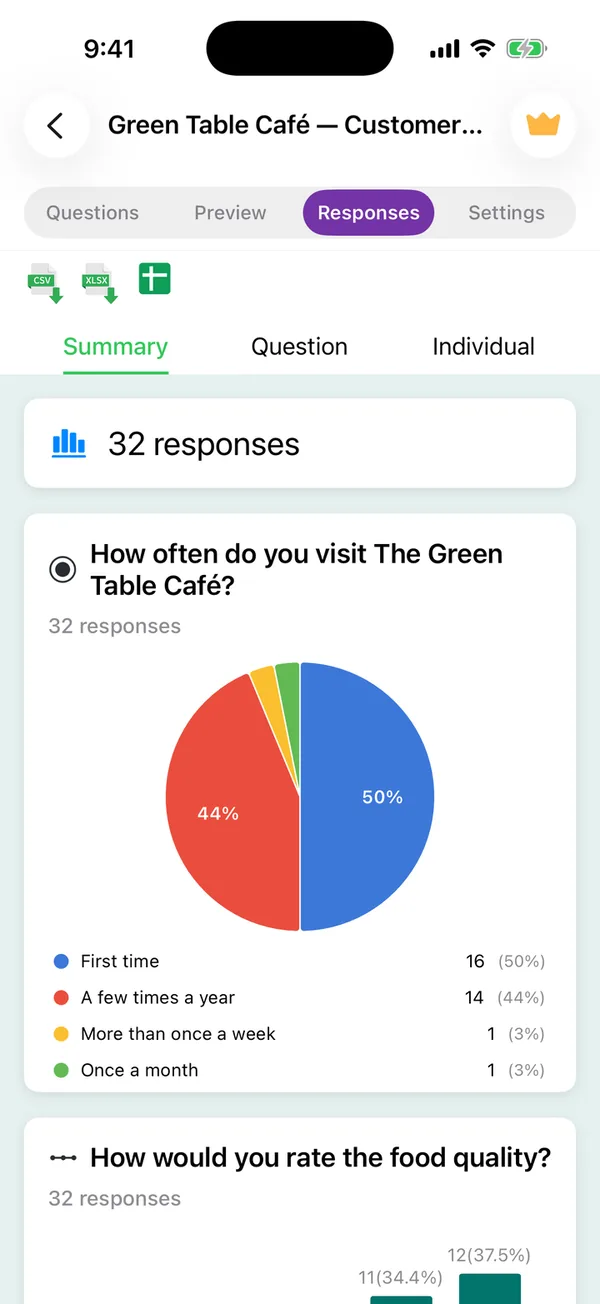
Three export icons sit under the tabs, green: CSV, Excel and Google Sheets. They are step 4.
Step 2: read the summary
Summary is the default view and the one I use during an event. Each question gets a chart matched to its type: a pie chart for a multiple-choice question, with the count and the percentage per option; a bar chart for a linear scale or a rating, one bar per value; a list of the answers for short answer and paragraph questions. The example above shows the frequency question as a pie, 50 percent first-time visitors, 44 percent a few times a year, and the food quality rating starting as bars below it.
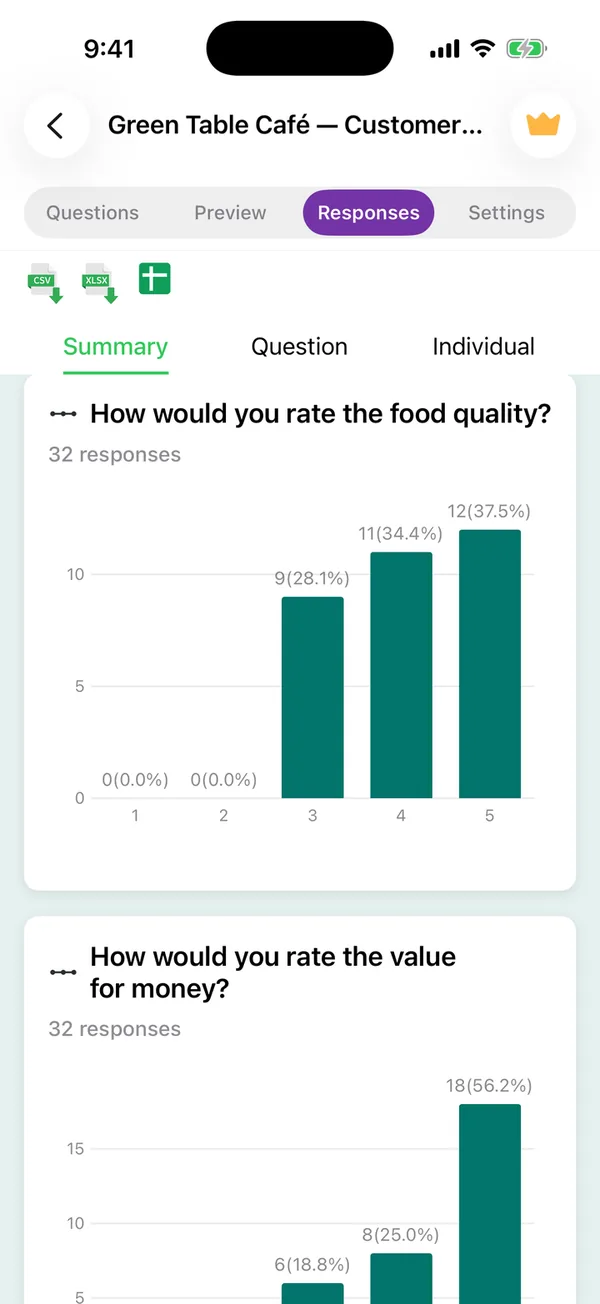
What the summary is good for: reading the mood of a room while the room is still in it. If forty people rated the venue 2 out of 5 on the way out, you know before the caterer has packed up. What it is not good for: cross-tabulation. The app does not show you “value for money among first-time visitors”; for that you export.
Step 3: read one question, or one person
Two more views next to Summary. Question shows one question at a time, with every answer to it, useful for reading all the free-text suggestions in one place without scrolling past the charts. Individual walks through one respondent at a time, every answer they gave, with arrows to move to the next; this is the view for a job application form or a quiz, where a person matters more than a percentage.
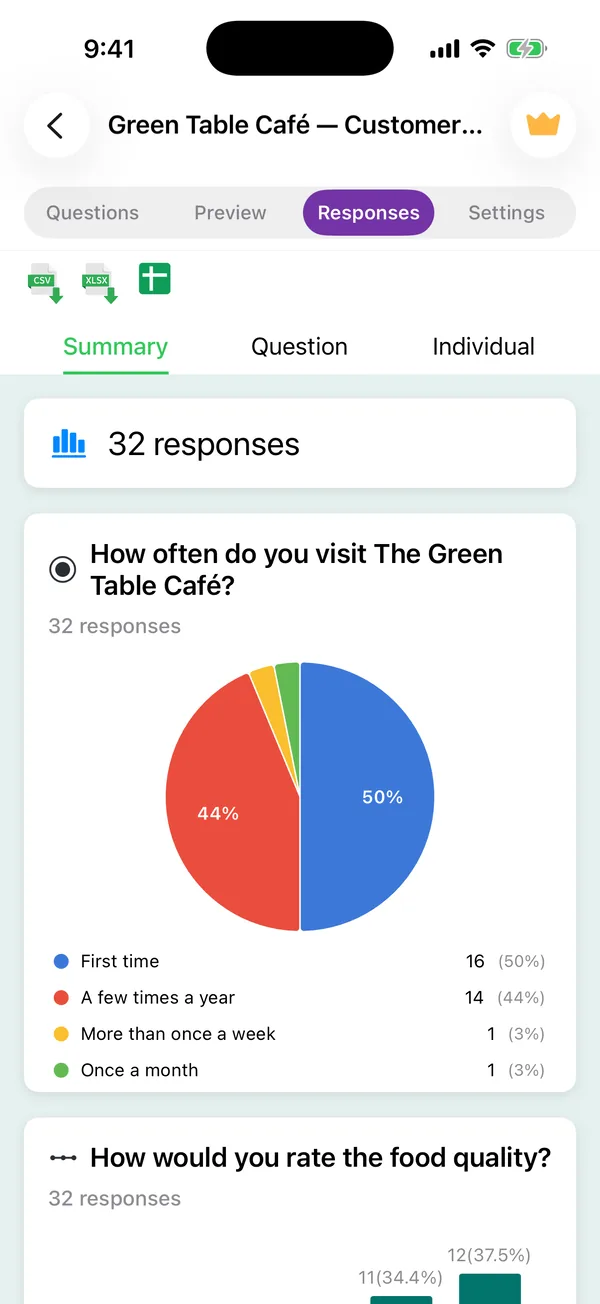
For a quiz, the Individual view is where the score appears, computed by Google Forms from the answer keys you set when building it.
Step 4: export
The three green icons under the tabs. CSV and Excel produce a file on the device, one row per response, one column per question, with the timestamp first, and hand it to the iOS share sheet: AirDrop it to a Mac, save it to Files, mail it to whoever asked for “the numbers”. Nothing passes through our servers; the file is built on the phone from the responses the app just read.
Google Sheets does something different: it creates a spreadsheet in your own Google Drive, linked to the form, so that every future response lands in it as a new row. This is the one to use when the analysis will happen on a computer, or when someone else needs live access. It is the same link Google Forms offers in a browser; the app just saves you finding it.
Step 5: let the form close itself
A form that keeps accepting answers after the event is how you end up with a response from someone in March about a dinner in September. Version 2.0 adds automatic closing in the Settings tab: after a number of responses, on a date, or both. The app checks the condition when you open it and, when iOS allows, in the background, and turns off “accepting responses” on your own Google Form when it is met.
Two uses I have for it. Sign-ups with a cap: 40 seats, closes at 40, the poster can stay up. Time-boxed feedback: closes on the Friday, and the summary you read on Saturday is the final one.
Step 6: when the phone is not enough
I read summaries on the phone and I do the real work on a computer, and I would tell anyone the same. Sorting, filtering, a pivot table, a chart for a report: Google Sheets, from step 4, on a screen wide enough for twelve columns. The phone’s job is to tell you, in the room, whether the thing went well. It does that in about four seconds from the lock screen. Fast enough.
One caveat on the data itself. Keeping your responses out of our hands does not take them out of Google’s; a Google Form is governed by Google’s terms whoever created it, and the responses sit in your Google account. If that matters for your respondents, say so in the form’s description before they answer.
Build the form on the device you already have
Keep reading
How to Make a QR Code for a Google Form on Mobile
Google Forms does not make QR codes. Where the link hides on a phone, and three ways to turn it into a code without a laptop, with the one that encodes the wrong address.
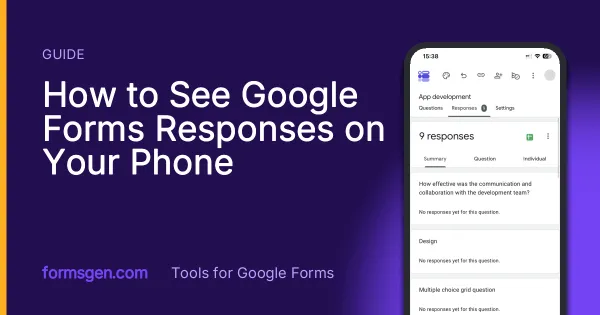
How to See Google Forms Responses on Your Phone
Three ways to read the answers on a phone, tested in Safari, in the Sheets app and in a third-party app, with which one to use for a glance, for the file and for a real analysis.
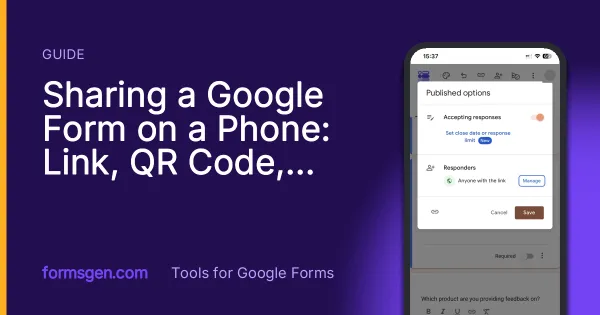
Sharing a Google Form on a Phone: Link, QR Code, WhatsApp
Where the link hides in the mobile publish dialog, how to make the QR code Google Forms does not offer, and the two settings to check before the link leaves your phone.