

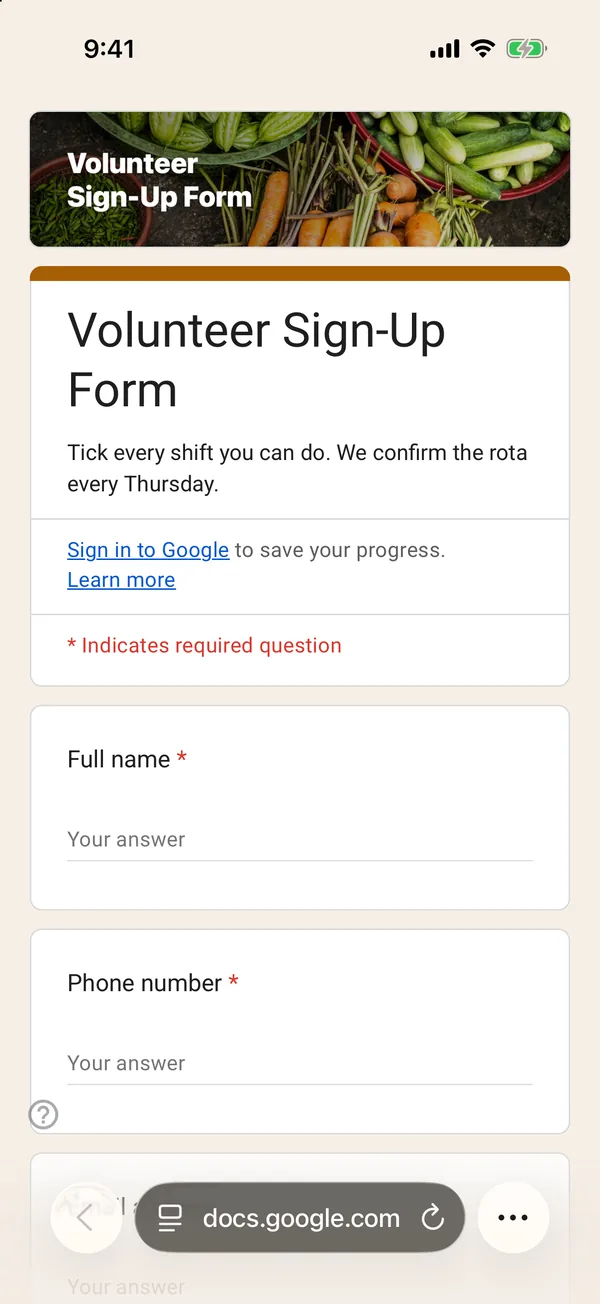
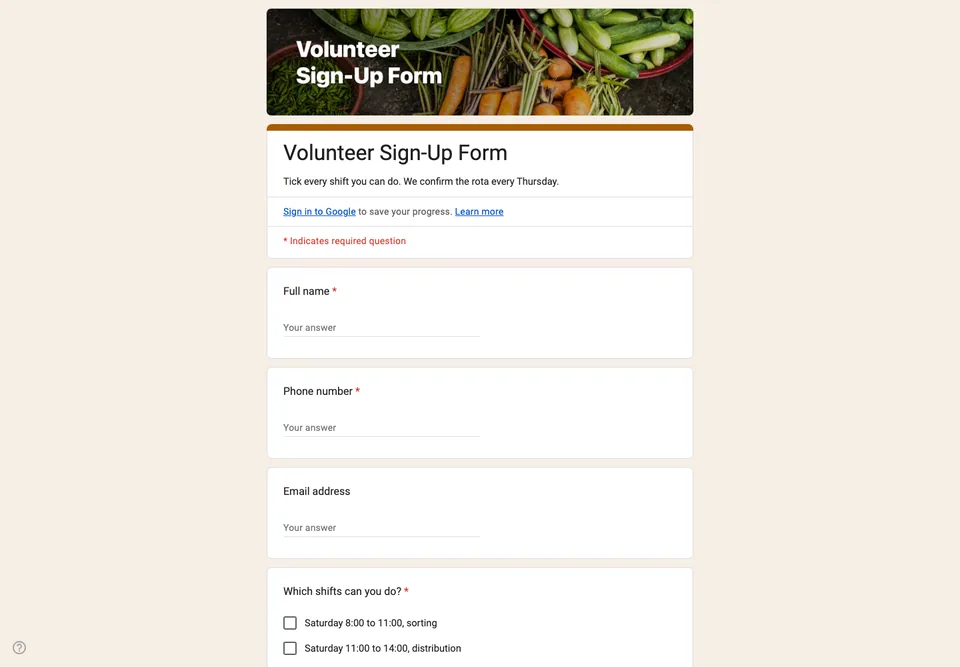
Volunteers sign up with enthusiasm and cancel with apologies, and the coordinator’s job is to know, before Saturday, whether there are enough hands for the morning delivery. A form gives every volunteer the same questions and the coordinator a sheet that answers that one.
Shifts as checkboxes
List the real shifts with their times, “Saturday 8:00 to 11:00, sorting”, and let people tick all they can do. The summary chart then shows which shift is short at a glance. A single “When are you available?” text box gives you forty different descriptions of the same weekend.
What they can and cannot do
Roles are checkboxes too: driving, lifting, sorting, front desk. Then one question few forms ask: “Is there anything you cannot do or would rather not do?” It is how you find out, kindly and in advance, that someone cannot lift boxes or does not want to deal with the public.
An emergency contact, and nothing more personal
A name and phone number for someone to call if a volunteer is taken ill is reasonable. Date of birth, address and health details are not needed to sort tins, so the form does not ask. If your organisation must check ages, ask “Are you 18 or over?” with yes or no.
Leave “Limit to 1 response” off, so volunteers do not need a Google account, and send the confirmed rota from the sheet once a week.